Underground construction services.
Eight core service lines covering underground and aerial pathway construction, cable placement, fiber splicing and site restoration for telecommunications and utility infrastructure.
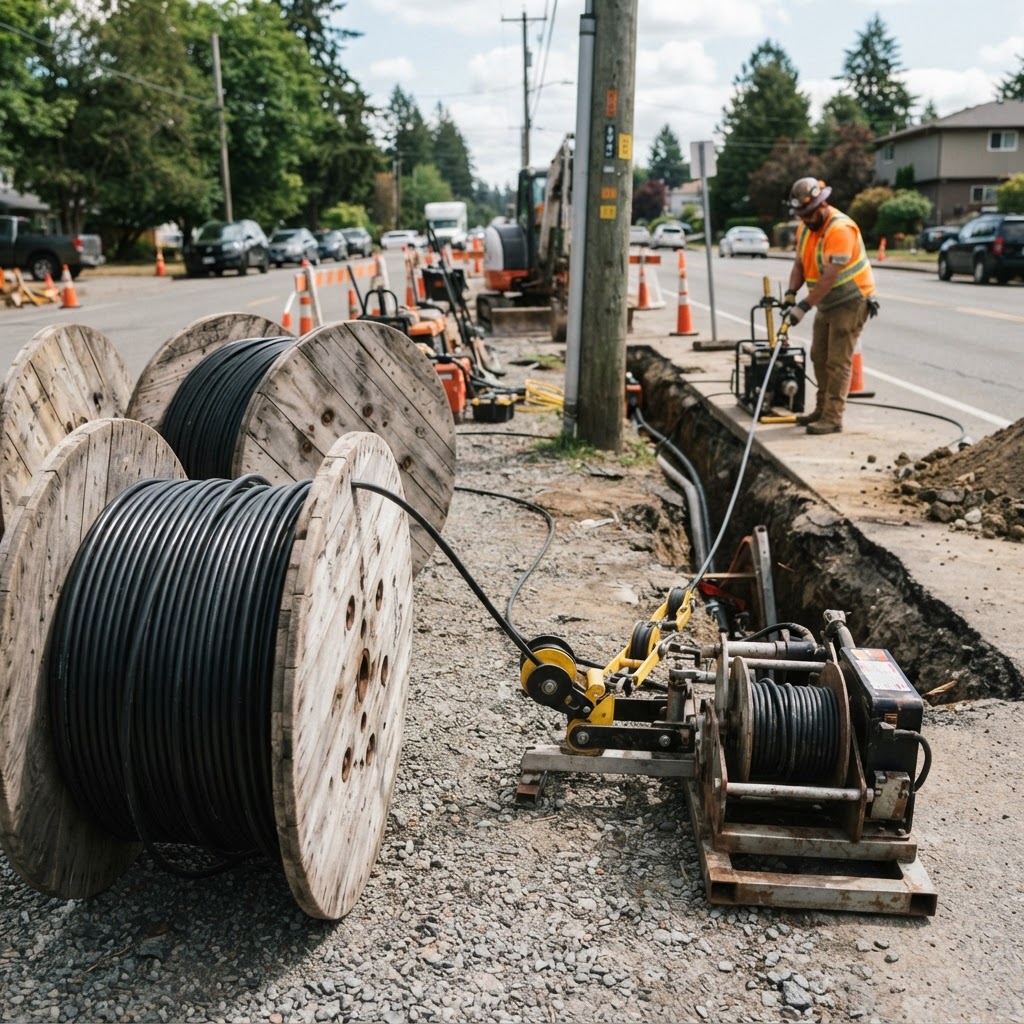 Underground Fiber
-Optic Construction
Underground fiber construction requires clean alignment, correct burial depth and pathways that can accept cable without damage. We build the trench, bedding and duct system around the engineered route, then support placement and restoration through closeout.
- Route and depth verification against engineered plans
- Trench excavation, bedding and duct installation
- Conduit pathway continuity and pull-point preparation
- Backfill, compaction and surface restoration
 Fiber Splicing
 & Testing
Splicing is where the network is actually joined. We fusion splice and terminate fiber cable in vaults, handholes, aerial closures and equipment rooms, then test and document the results so the client knows what was built and how it performs.
- Fusion splicing of loose tube, ribbon and drop cable
- Underground, aerial and rack-mounted splice closures
- Connector termination and patch panel work
- OTDR testing, power meter readings and splice records
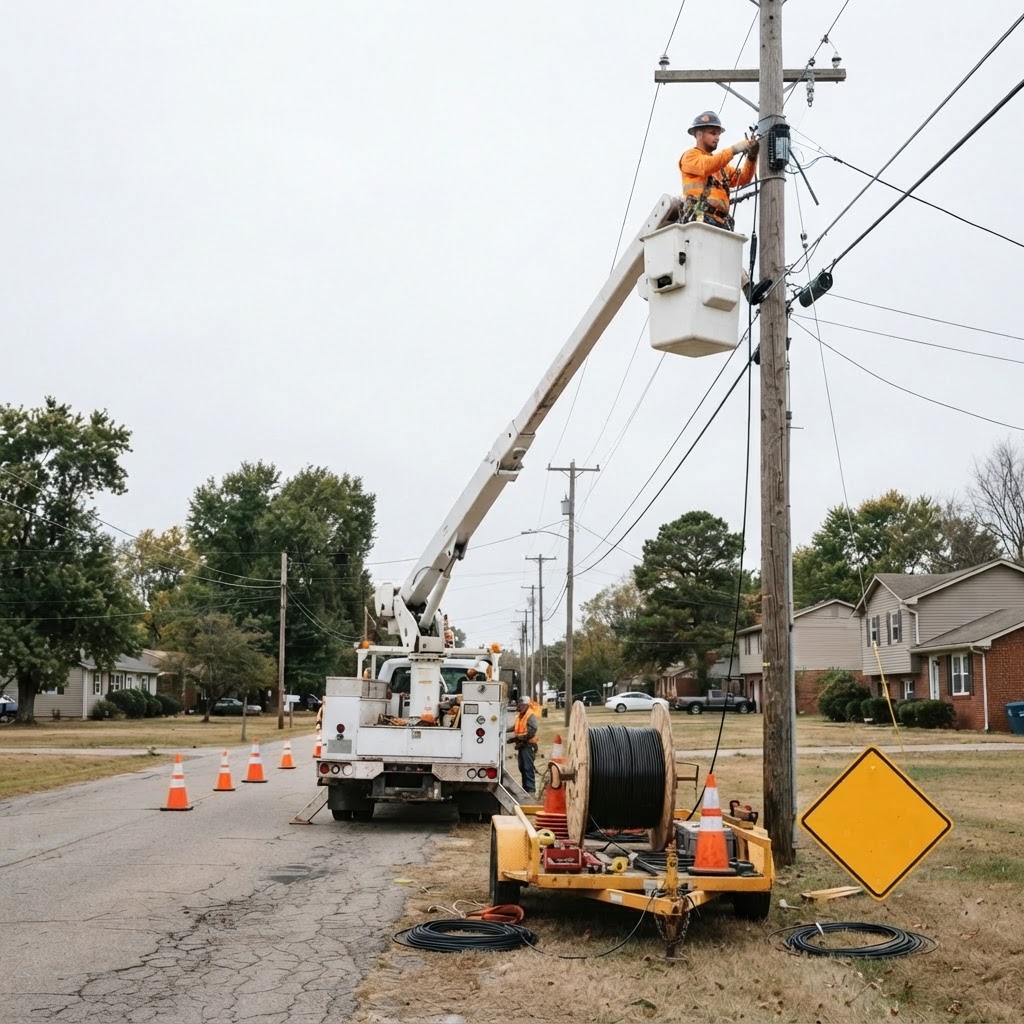 Aerial Construction
Aerial fiber follows the pole line rather than the trench. We install strand, lash cable, set closures and handle the make-ready, clearance and pole attachment coordination aerial work requires, with the same attention to safety and documentation as our underground scopes.
- Strand installation, tensioning and guy/anchor work
- Lashed and ADSS aerial fiber placement
- Aerial splice closures and pole attachment coordination
- Make-ready review, clearances and permit coordination
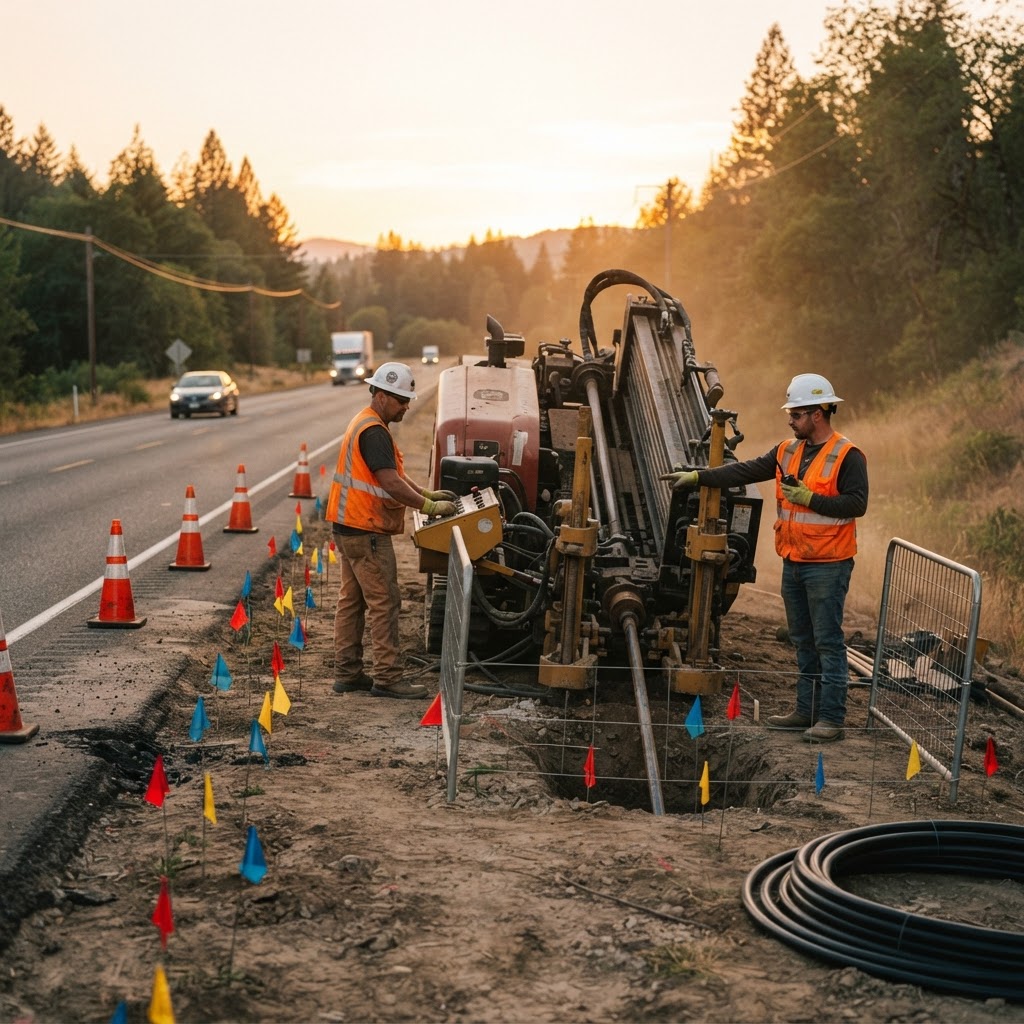
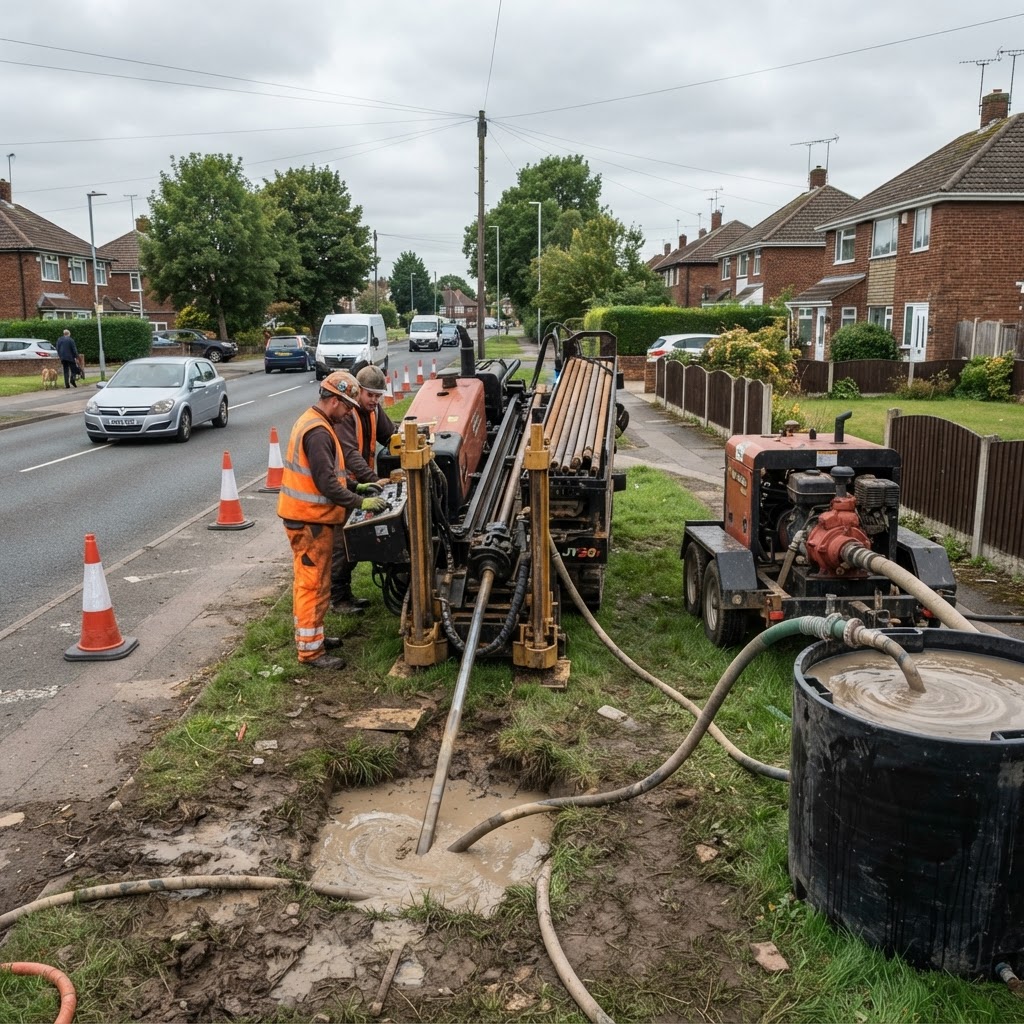 HDD
Horizontal Directional Drilling (HDD)
HDD reduces surface disruption where open cut is impractical — road crossings, driveways, landscaped areas and constrained rights-of-way. Feasibility, bore profile and clearances are always governed by engineering review and confirmed site conditions.
- Bore path planning and potholing coordination
- Pilot bore, reaming and pullback support
- Road, sidewalk and landscape crossings
- Entry and exit pit excavation and restoration
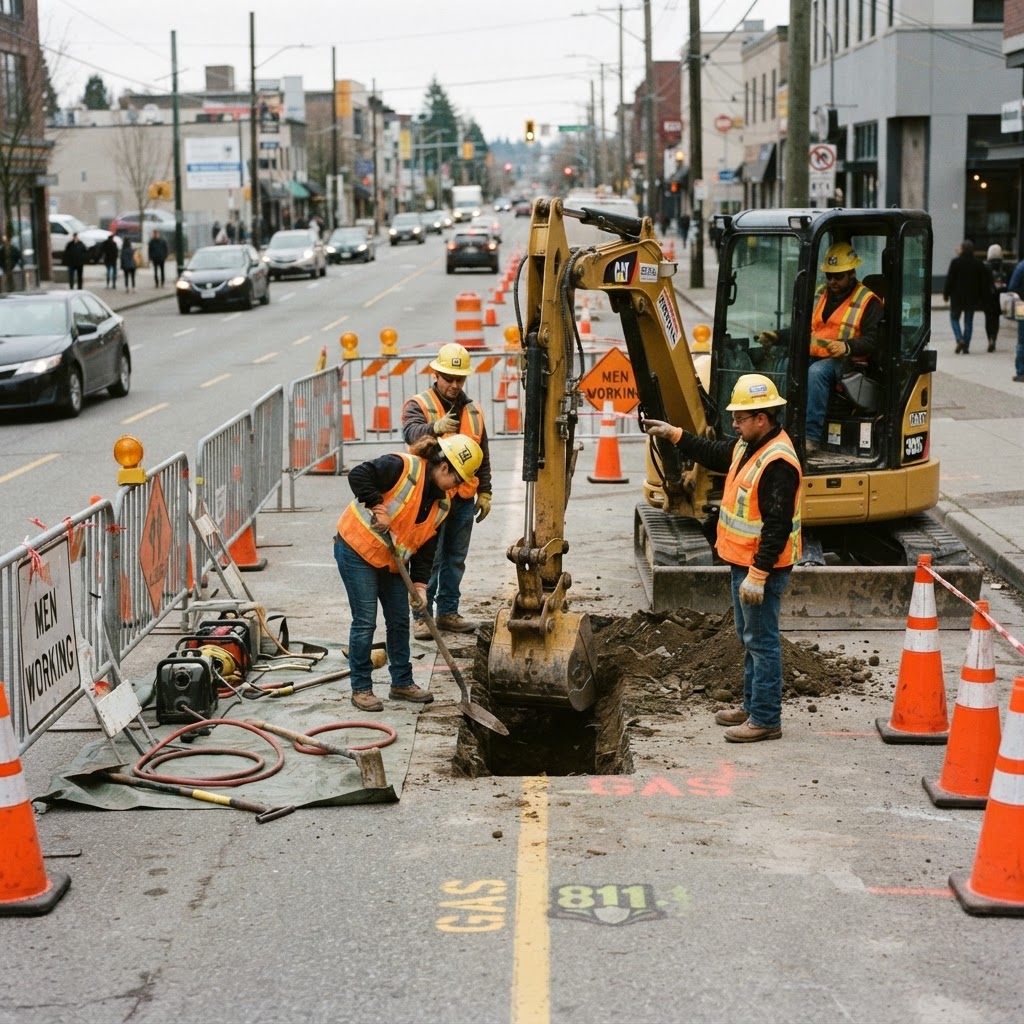
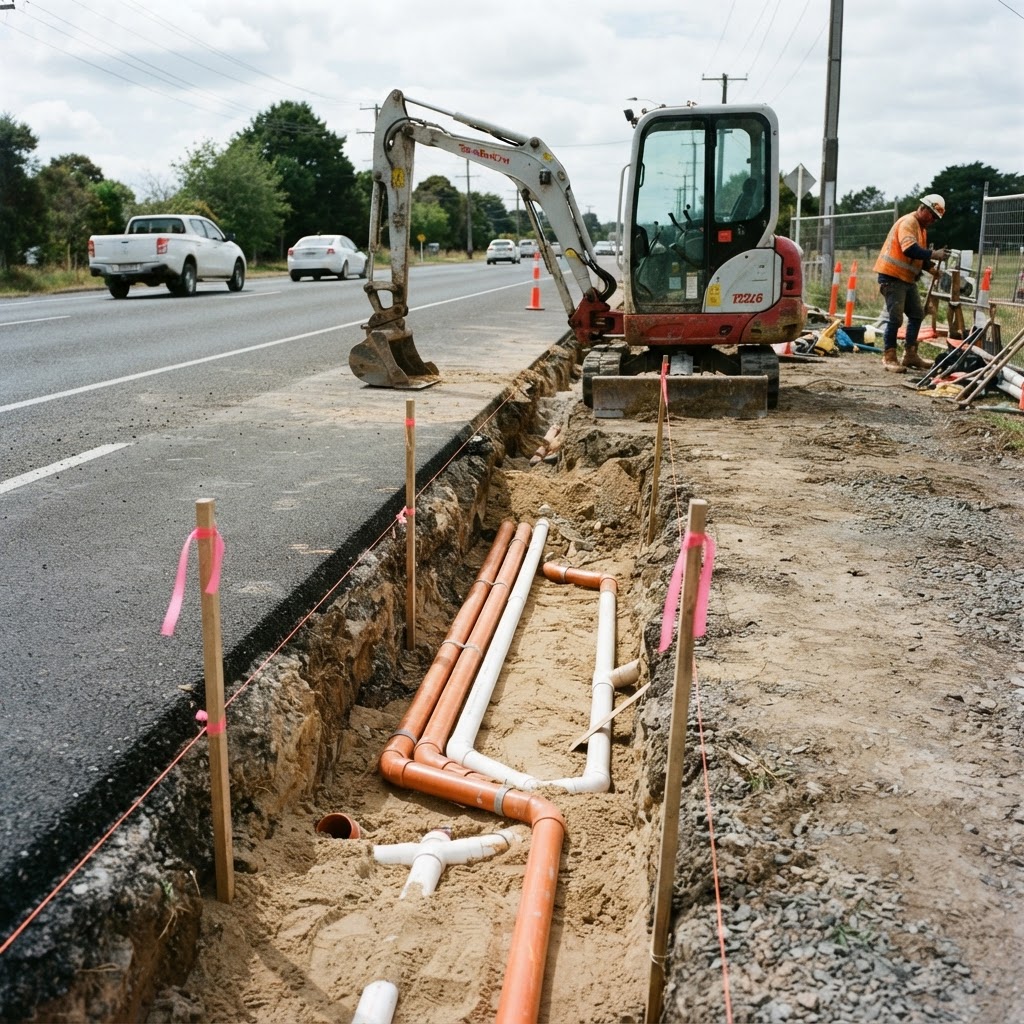 Trenching
 & Excavation
Excavation is where schedule and site condition meet. We cut clean, controlled trenches along the approved alignment, manage spoils and traffic exposure, and restore the surface to the standard the jurisdiction requires.
- Saw-cut and controlled trench excavation
- Spoil management and traffic control coordination
- Bedding, backfill and compaction
- Asphalt, concrete and landscape restoration
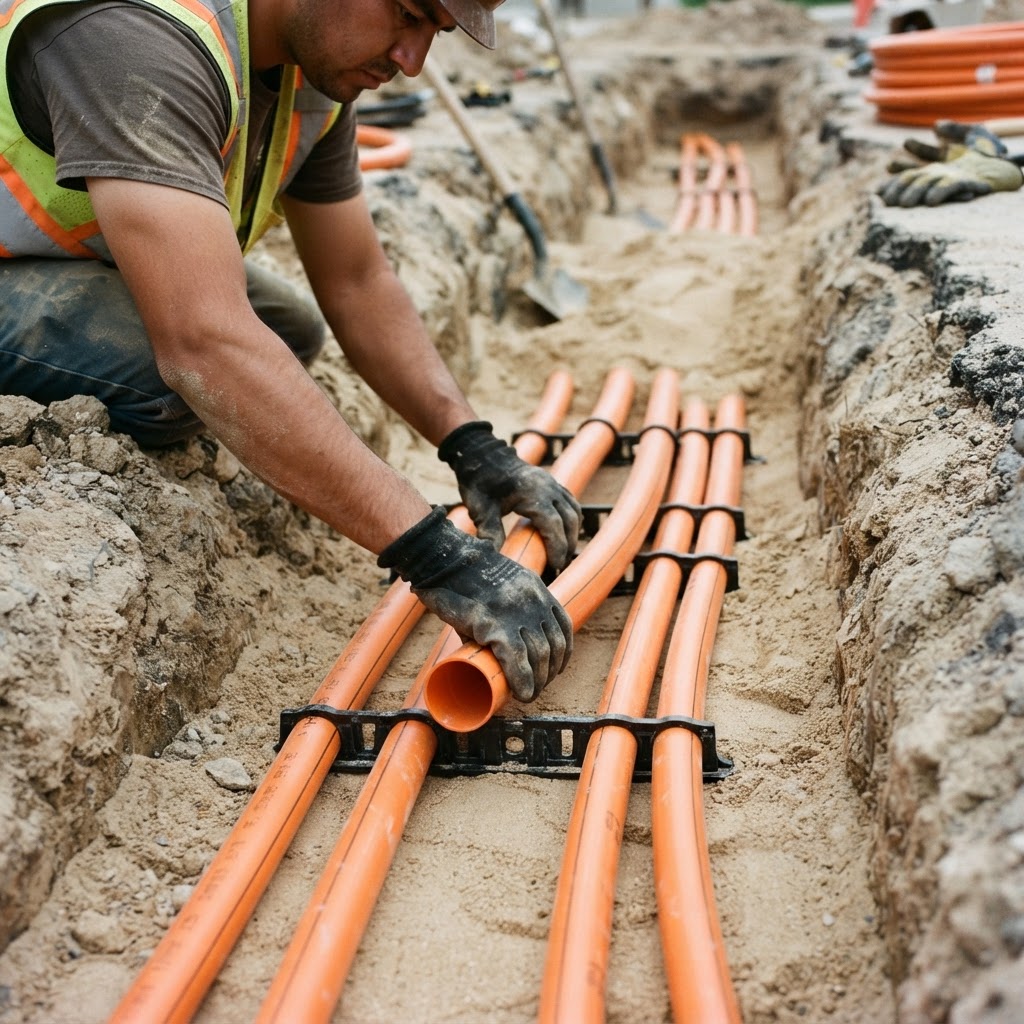 Conduit
 & Innerduct Installation
The duct system determines how easily a network can be built and later expanded. We install conduit and innerduct with attention to grade, spacing, bend radius and mandrel condition so cable placement goes smoothly.
- PVC, HDPE and multi-duct bank installation
- Innerduct placement and tagging
- Bend radius and grade control
- Mandrel testing and pathway proving
 OSP
Outside Plant (OSP) Infrastructure
Outside plant work connects the engineered network to the field. We support underground expansion and upgrade scopes with crews who understand splice points, handholes, pedestals and the coordination required around live facilities.
- Underground network expansion and upgrades
- Handhole, vault and pedestal placement
- Coordination around existing live facilities
- As-built documentation support
 Cable Placement
Underground Cable Placement
Cable placement is a controlled operation: correct tension, adequate lubrication, protected bends and clean pull points. We place cable into prepared duct systems and document what went where.
- Cable pulling and tension monitoring
- Duct proving and lubrication
- Route identification and tagging
- Placement records and closeout documentation
From the ground up. Built for connection.
Every underground project moves through the same disciplined sequence. The depth of each stage scales with scope, but the order does not change — plan it, prepare it, build it, verify it, and leave the site better than we found it.
- 01
Planning & Coordination
Scope review, utility locate coordination, access and traffic planning, and a schedule the field can actually work to.
- 02
Site Preparation
Mobilization, marking and potholing, saw-cutting, traffic control setup and protection of existing surfaces.
- 03
Underground Construction
Trench excavation or directional bore along the approved alignment, with depth and grade held to specification.
- 04
Conduit & Cable Placement
Duct and innerduct installation, pathway proving, then controlled cable pulling and route identification.
- 05
Quality Review
Field verification of depth, alignment, pathway continuity and placement records before backfill closeout.
- 06
Site Restoration & Closeout
Compaction, surface restoration, debris removal and delivery of as-built documentation.
Actual project phases, sequencing and deliverables vary by scope, engineering requirements and site conditions.
Have an underground scope to build?
Send the project details and the A.I.G. team will review the scope, location and schedule to determine fit.